
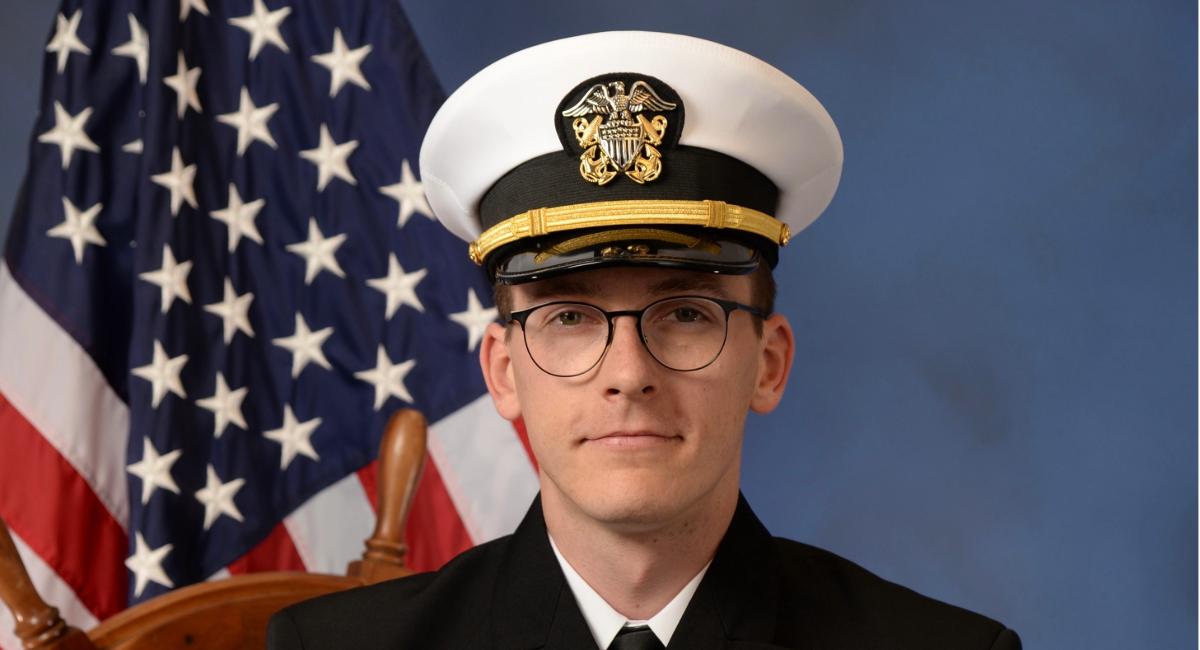
Riley Owen Published in Deseret News Defending Religious Freedom in U.S. Military
The following is an Op-Ed published by Riley Owen in the Deseret News in response to the Pentagon's decision to streamline recognized religions.
Last week, the Pentagon streamlined the military’s list of recognized religions from over 200 down to 31. This was done to make it easier for chaplains to deliver support to service members. I can understand and even appreciate why this was done.
However, as a Navy Reserve officer, an active member of The Church of Jesus Christ of Latter-day Saints and the Republican congressional nominee in Utah’s newly drawn 1st District, I have concerns with how this was done. Any opinions expressed are my own and do not represent the Department of the Navy or Department of Defense.
Last weekend, I was on my monthly drill weekend when I heard the news. Upon reading the new list of recognized religions, naturally, I searched first for my faith to be listed. I then noticed that a hefty 21 of the 31 religions listed are preceded by a “Christian” label, but my faith was not among them. It weighed on me as I served.
According to Pew Research, 62% of Americans identify as Christian. As such, it is entirely logical to me that two-thirds of this list reflects Christian denominations. However, only Christianity received a denominational breakdown. For example, no delineation was made between Shiite and Sunni Muslims or between Orthodox, Conservative, Reform and Reconstructionist Jews.
Most people, especially here in Utah, are already aware of the perennial theological food fight surrounding the inclusion or exclusion of The Church of Jesus Christ of Latter-day Saints as a “Christian” faith. While I consider myself a believer and follower of Christ, I don’t mind being in a category of our own as non-creedal Christians. Religious debate aside, the real goal is unity in our Armed Forces and keeping the government out of religion.
My greater concern is the appearance that the government is wading into the theological arena and implicitly publishing an unspoken encyclical of its own. Not only is Christianity given a uniquely comprehensive treatment, but the government has also fenced off the denominational boundaries.
This sets a dangerous precedent and falls deeply outside the purview of the government’s constitutional powers. I’m not saying there’s not a time and place to delineate and defend what it means to be a disciple of your faith, but I do know that should never be the role of government.
The concept of “separation of church and state” actually never appears in the Constitution, though the principle is enshrined in the First Amendment. The phrase comes from an 1802 letter from Thomas Jefferson to a Connecticut Baptist congregation. Rather than emphasizing that the principle would shield the government from religious influence, Jefferson reassured congregants that it would protect religion from the state.
When I put on my uniform, I become part of something much larger than myself. My personal characteristics — religious or otherwise — stay personal as I fulfill my duties to create a more ready, unified and lethal fighting force to defend America and its interests. I am grateful that Secretary of War Pete Hegseth boldly and frequently asserts that unity is our true strength. Coincidentally, that same principle has been taught for decades by President Dallin H. Oaks, president of The Church of Jesus Christ of Latter-day Saints.
Every American, especially those who answer the call to serve our country, deserves the right to worship without government interference. It’s one of the many reasons why I’m running for Congress: To ensure that we live in a fair, free and prosperous society that works for everyone.
This week, I’m grateful to see the Department of Defense quickly amended this list by dropping categorical prefixes to the names of recognized religions. I could not agree more with their statement, “The Pentagon’s job is not to adjudicate theological debates, but instead to ensure sincerely-held faith is respected and encouraged in our ranks.”
How grateful I am to serve in the world’s finest military and live in a country where I am free to worship (or not) according to the dictates of my conscience.